
Some Questions
FEMA Gallery – Cascais, 2025
By Suzana Queiroga
FEMA Gallery – Cascais, 2025
By Suzana Queiroga
The size of Infinity
by Victor Gorgulho
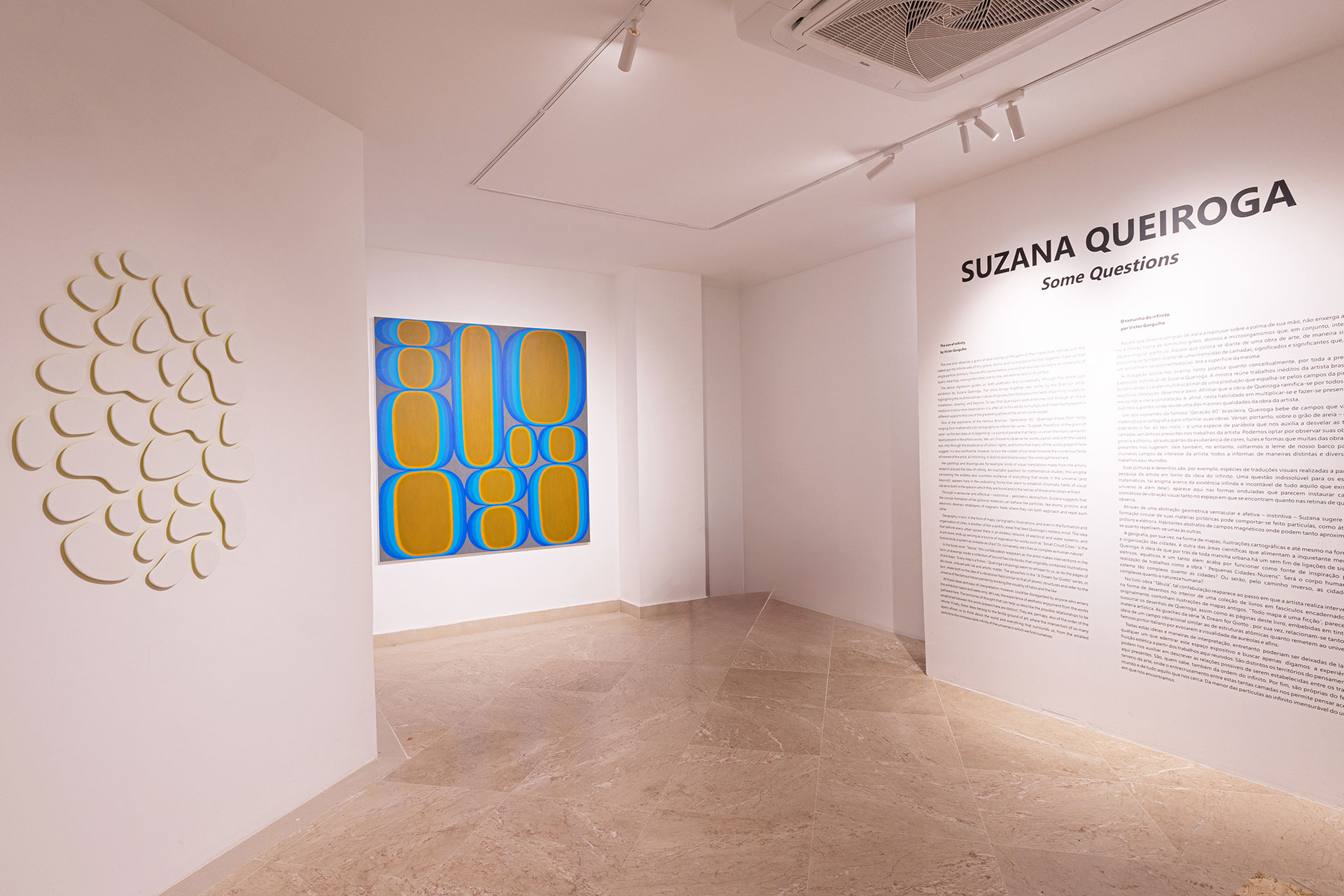
The one who observes a grain of sand resting on the palm of their hand does not see with the naked eye the infinite web of tiny grains, atoms, and microorganisms that, together, make up that single particle. Similarly, the one who stands before a work of art also stands before an immensity of layers, meanings, and signifiers that, one by one, are sedimented on its surface.
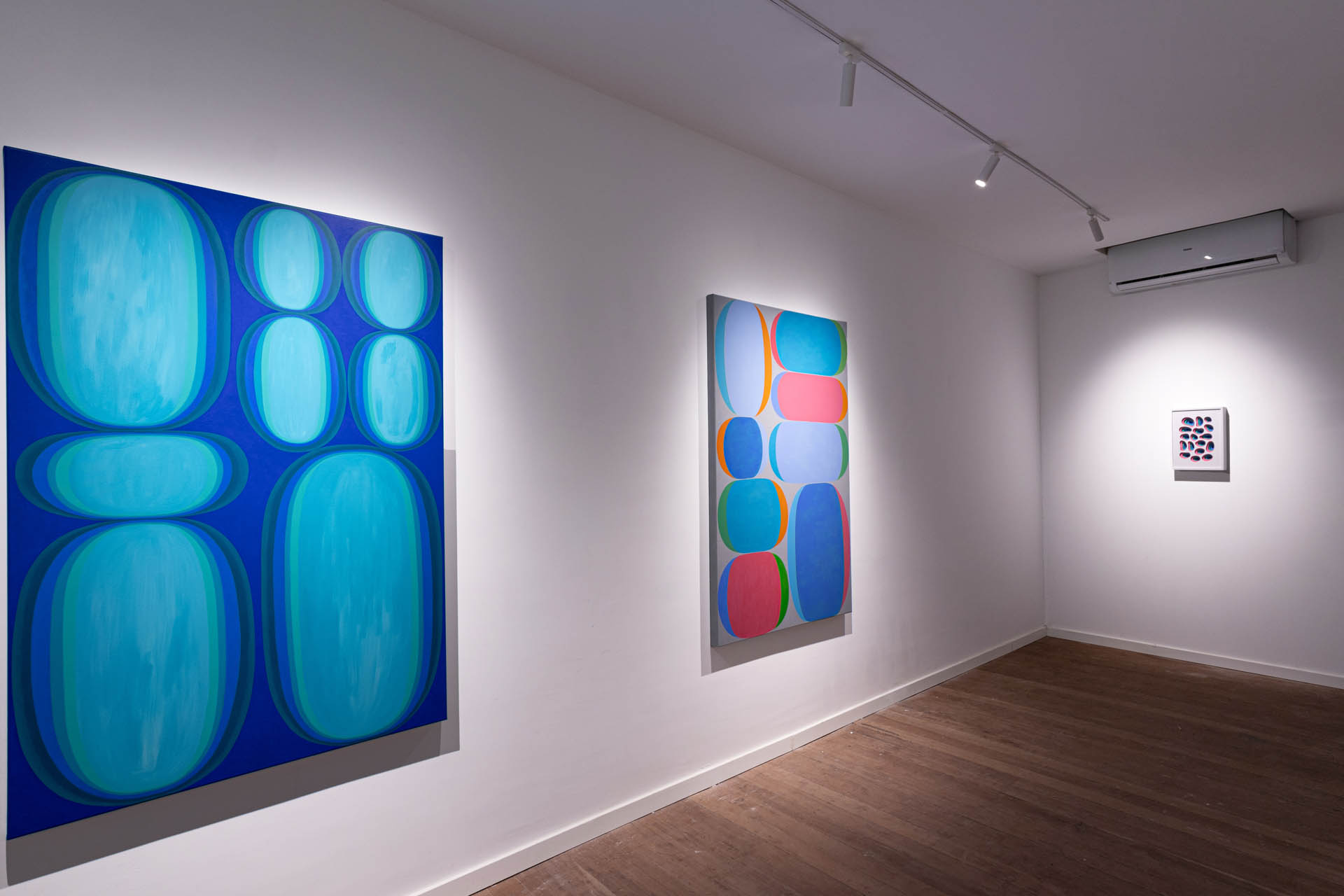
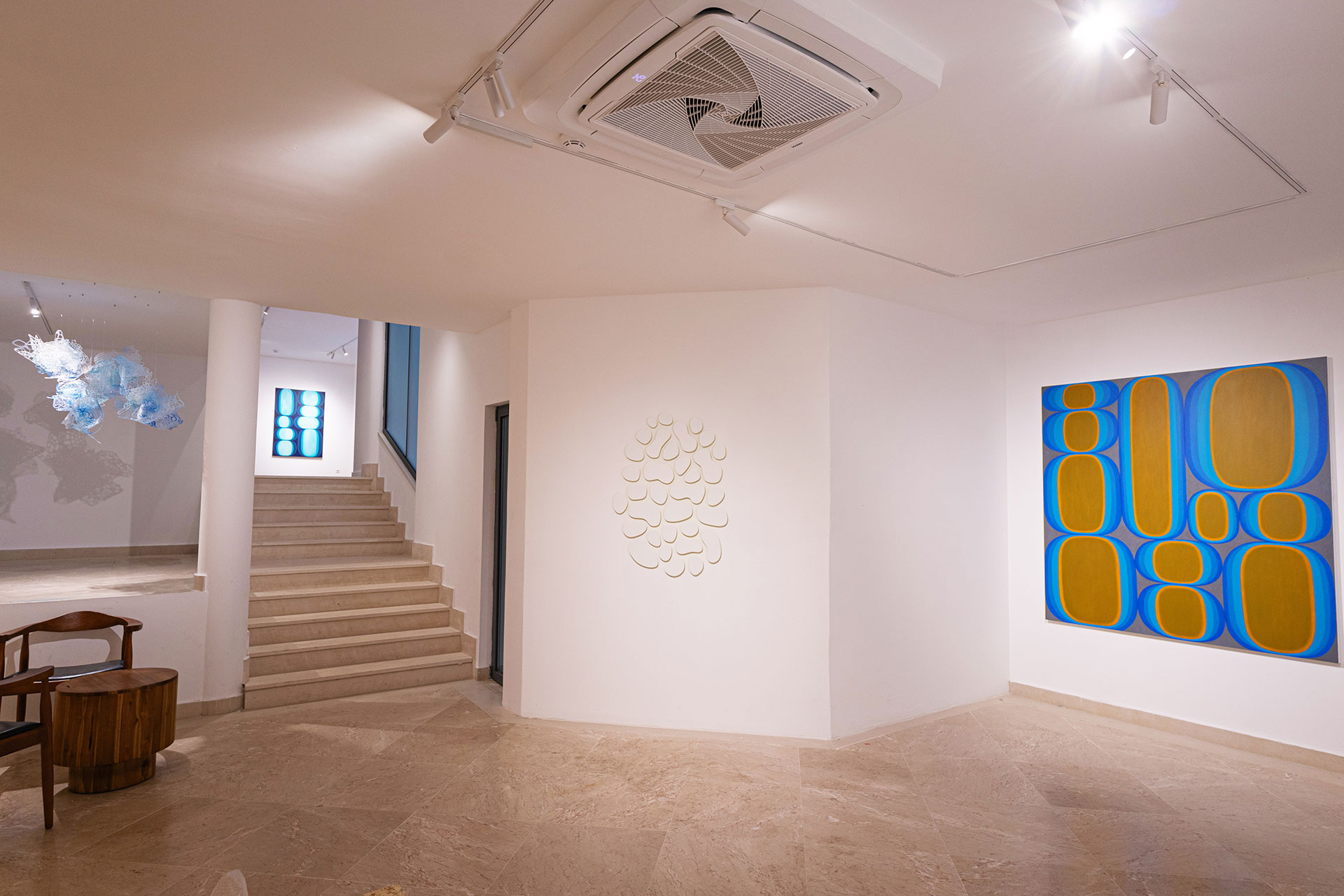
The above digression guides us, both poetically and conceptually, through this entire solo exhibition by Suzana Queiroga. The show brings together new works by the Brazilian artist, highlighting the multidisciplinary nature of a production that spans the fields of painting, sculpture, installation, drawing, and beyond. To say that Queiroga’s work branches out through all these mediums is not a mere observation: it is, after all, in this ability to multiply and make itself present in different supports that one of the greatest qualities of the artist’s work resides.
One of the exponents of the famous Brazilian “Generation 80,” Queiroga draws from fields ranging from mathematics to cartography to inform her works. To speak, therefore, of the grain of sand – as this text does at its beginning – is a kind of parable that helps us unveil the many semantic layers present in the artist’s works. We can choose to observe her works, a priori and with the naked eye, only through the exuberance of colors, lights, and forms that many of the works present here suggest. It is also worthwhile, however, to turn the rudder of our boat towards the numerous fields of interest of the artist, all informing, in distinct and diverse ways, the works gathered here.
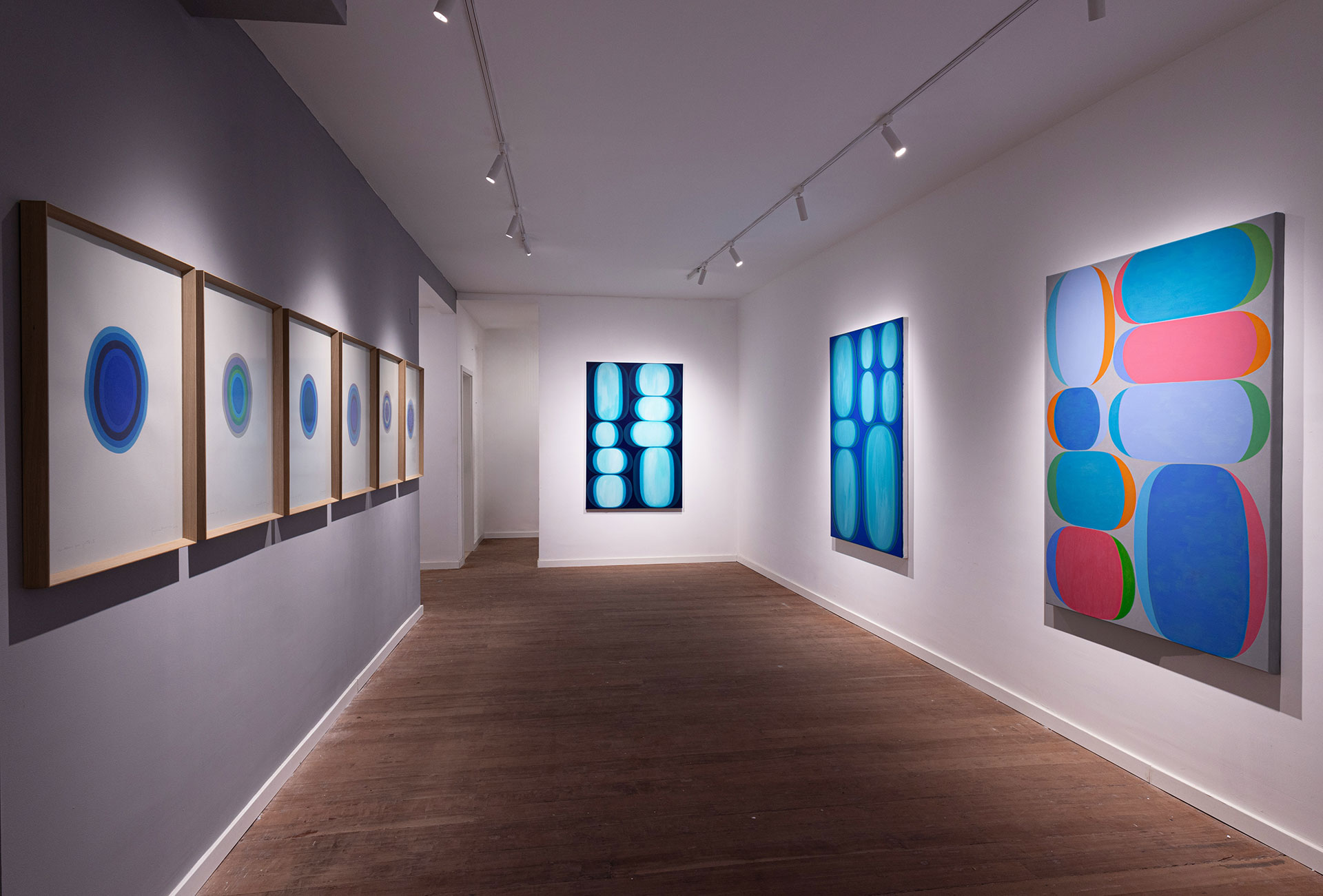
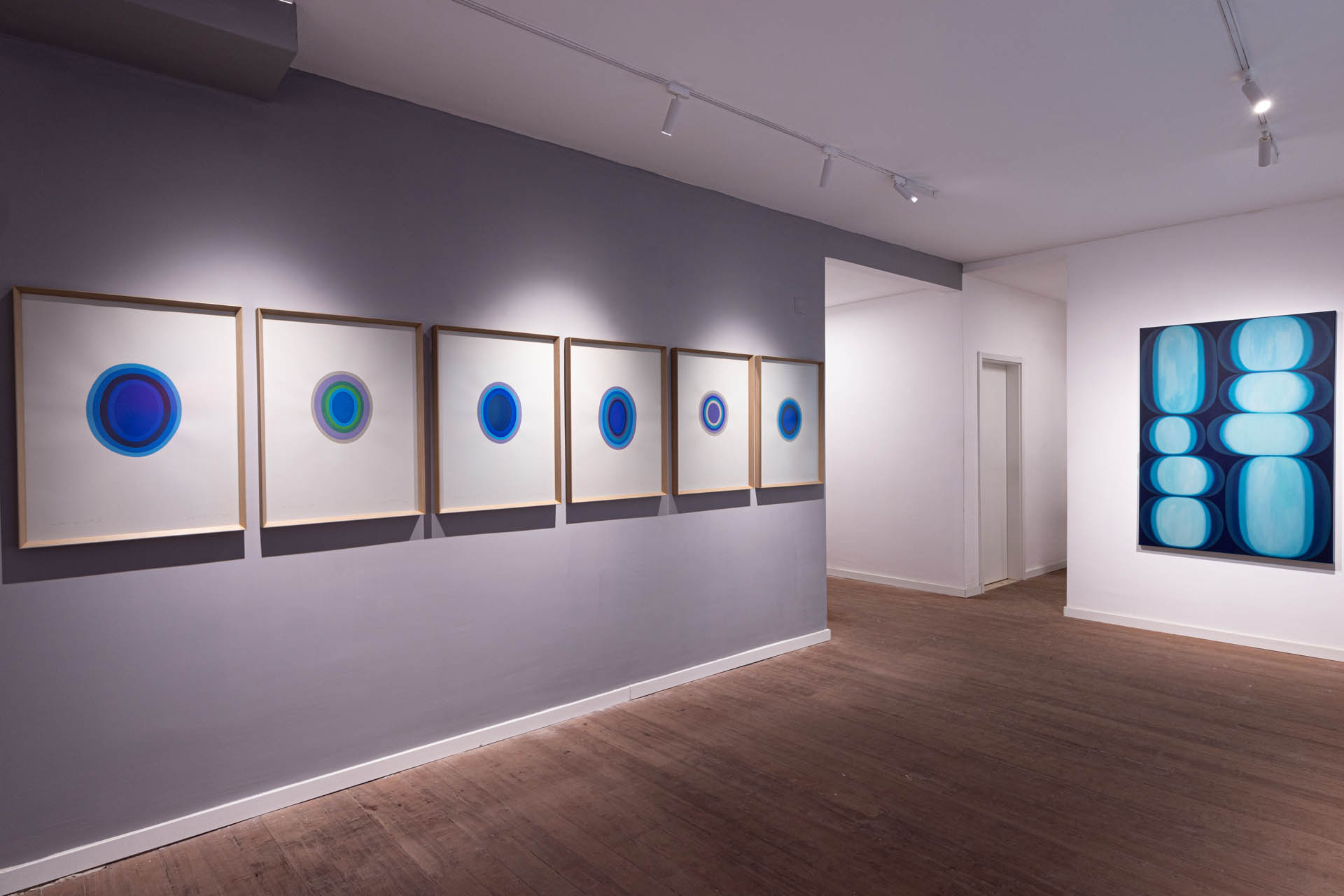
Her paintings and drawings are, for example, kinds of visual translations made from the artist’s research around the idea of infinity. An insoluble question for mathematical studies, this enigma concerning the endless and countless existence of everything that exists in the universe (and beyond!), appears here in the undulating forms that seem to establish chromatic fields of visual vibration both in the space in which they are found and in the retinas of those who observe them.
Through a vernacular and affective – instinctive – geometric abstraction, Suzana suggests that the circular formation of her pictorial materials can behave like particles, like atoms, protons, and electrons. Abstract inhabitants of magnetic fields where they can both approach and repel each other.
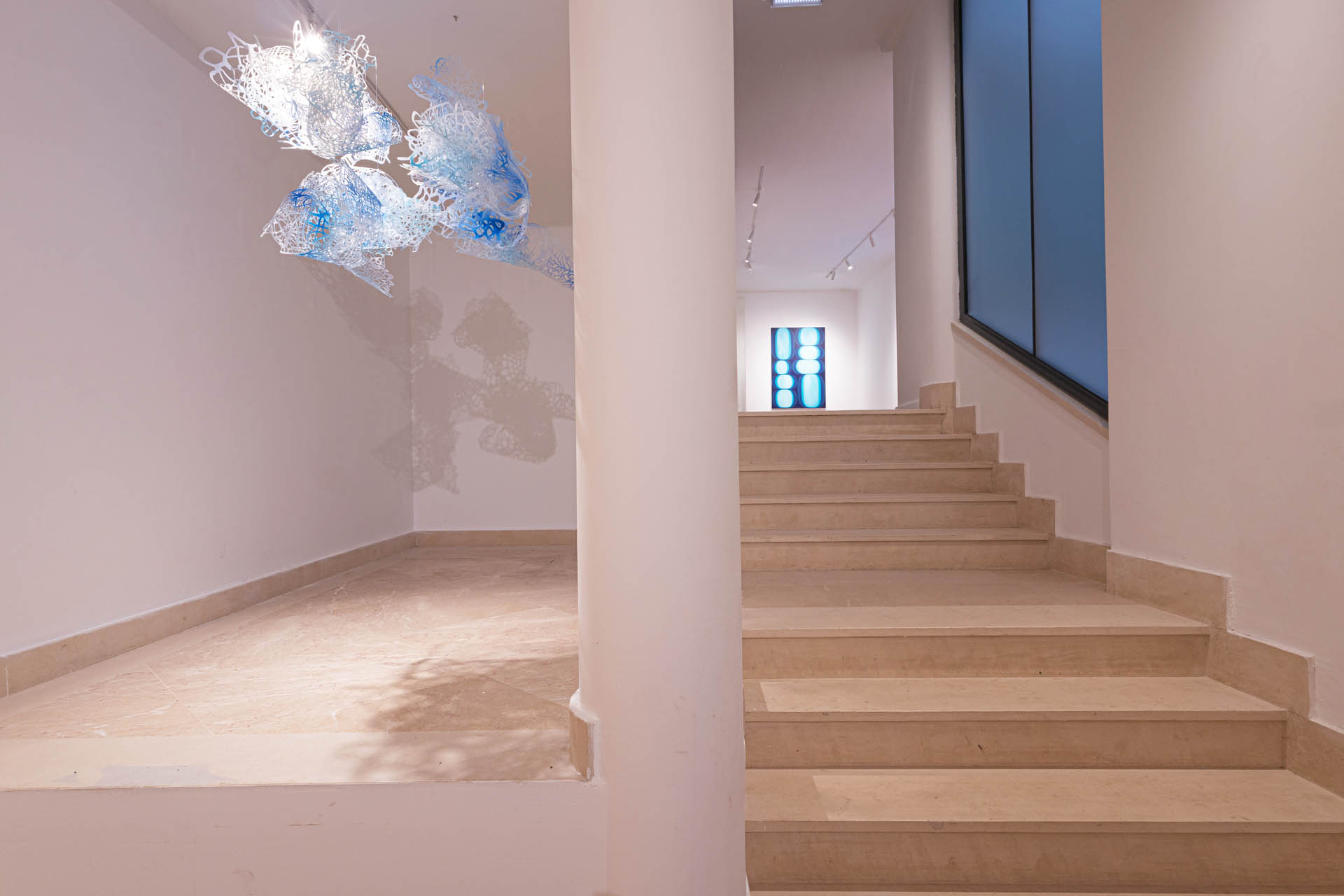
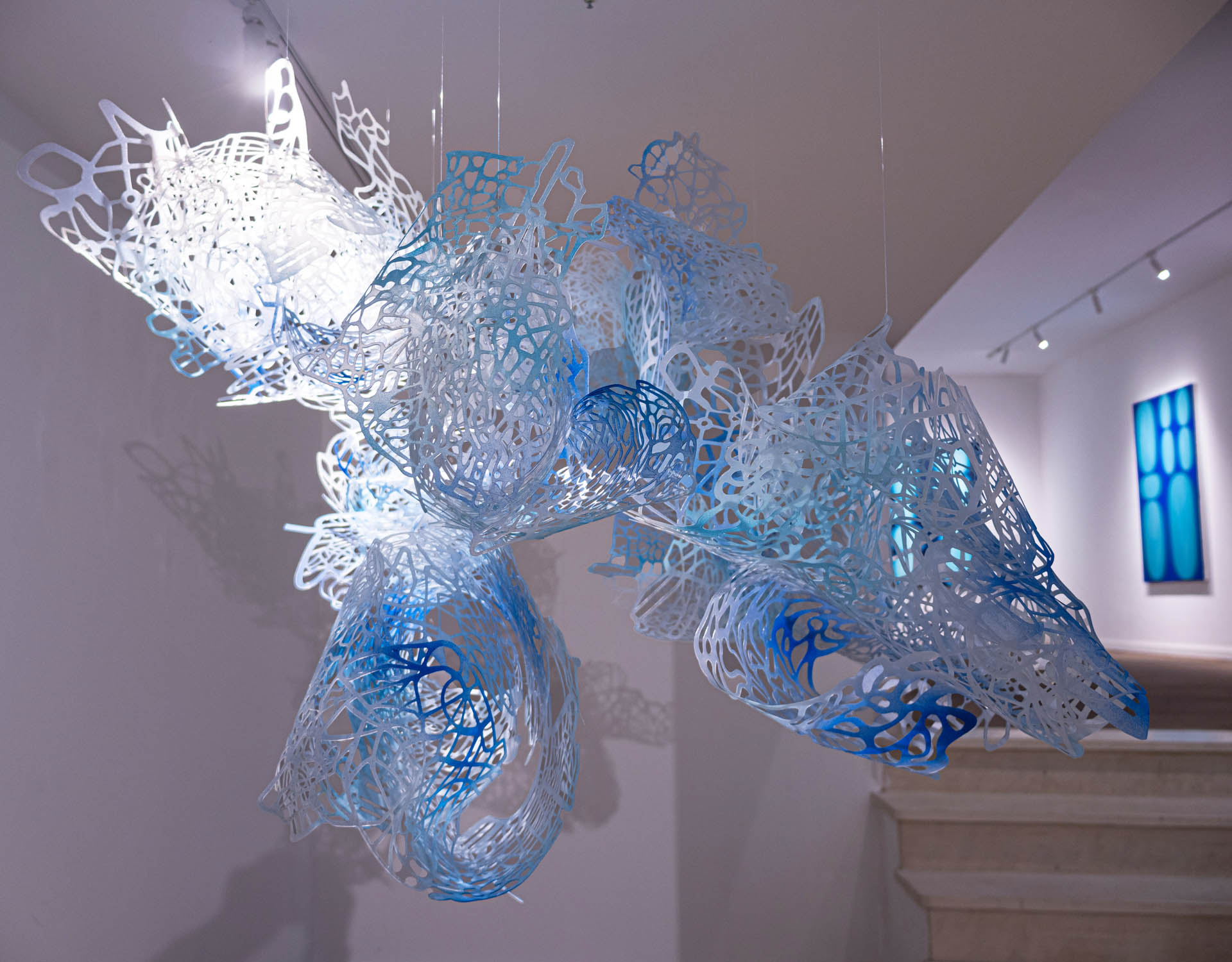
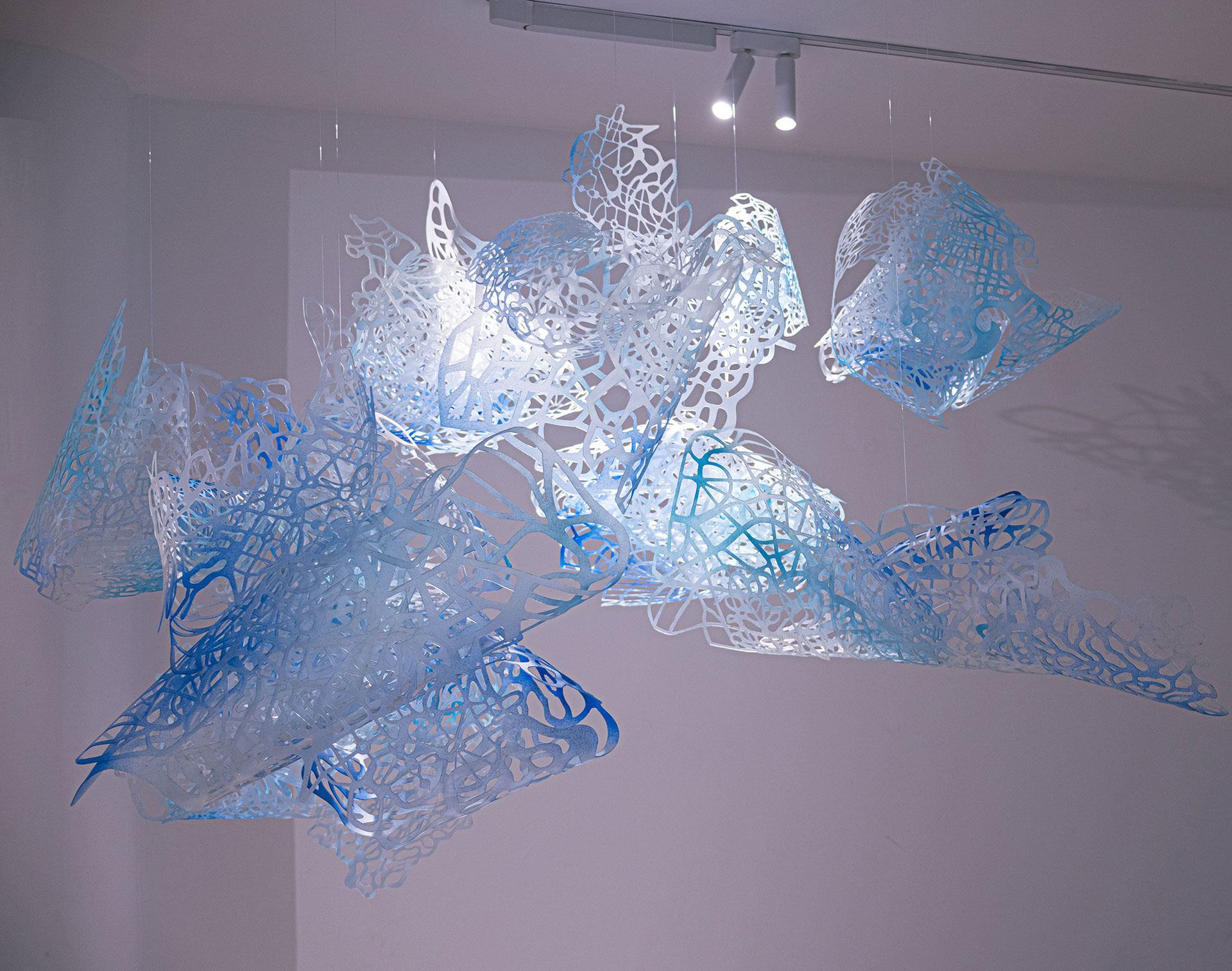
Geography, in turn, in the form of maps, cartographic illustrations, and even in the formation and organization of cities, is another of the scientific areas that feed Queiroga’s restless mind. The idea that behind every urban sprawl there is an endless network of electrical and water systems, and much more, ends up serving as a source of inspiration for works such as “Small Cloud Cities.” Is the human body a system as complex as cities? Or, conversely, are cities as complex as human nature?
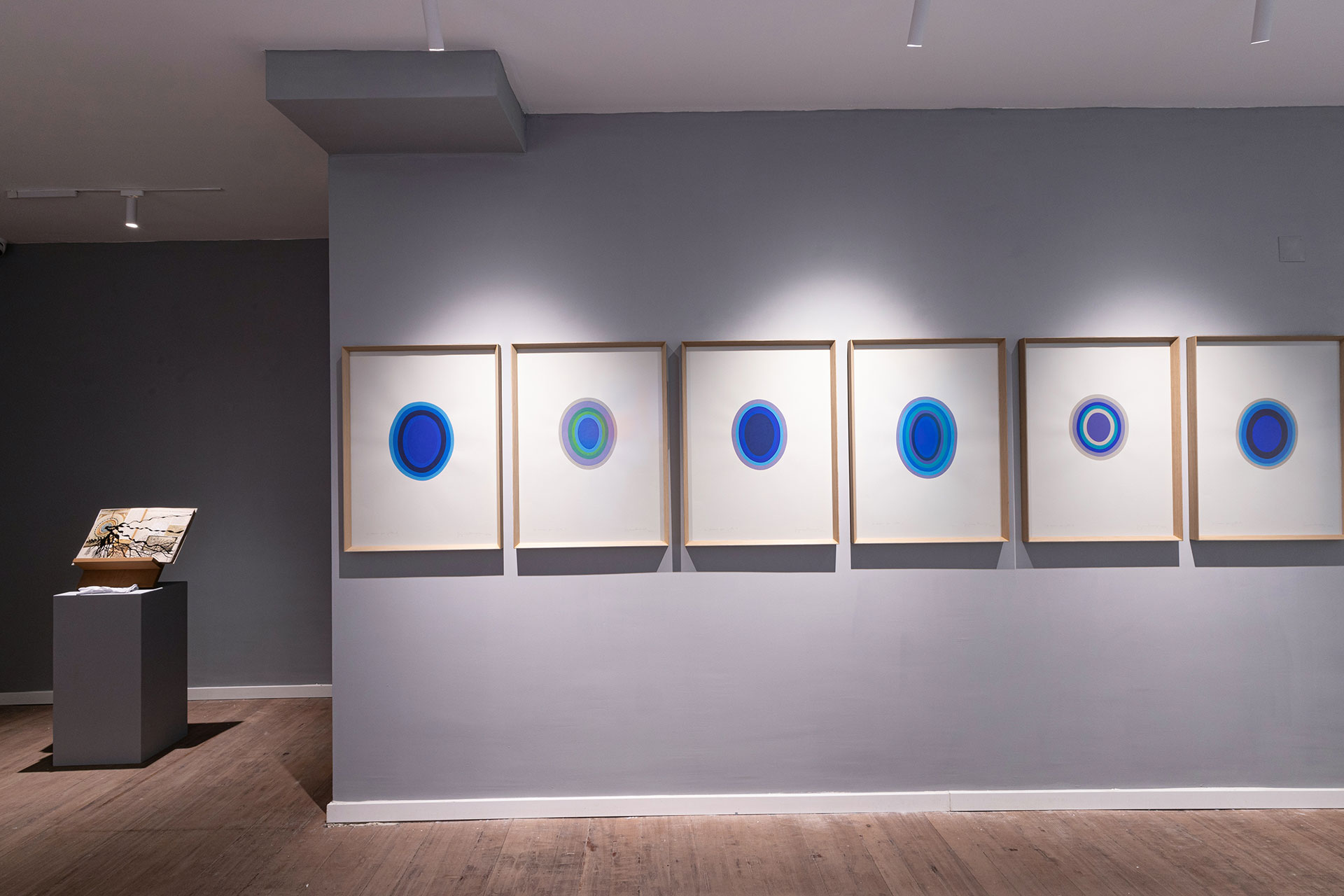
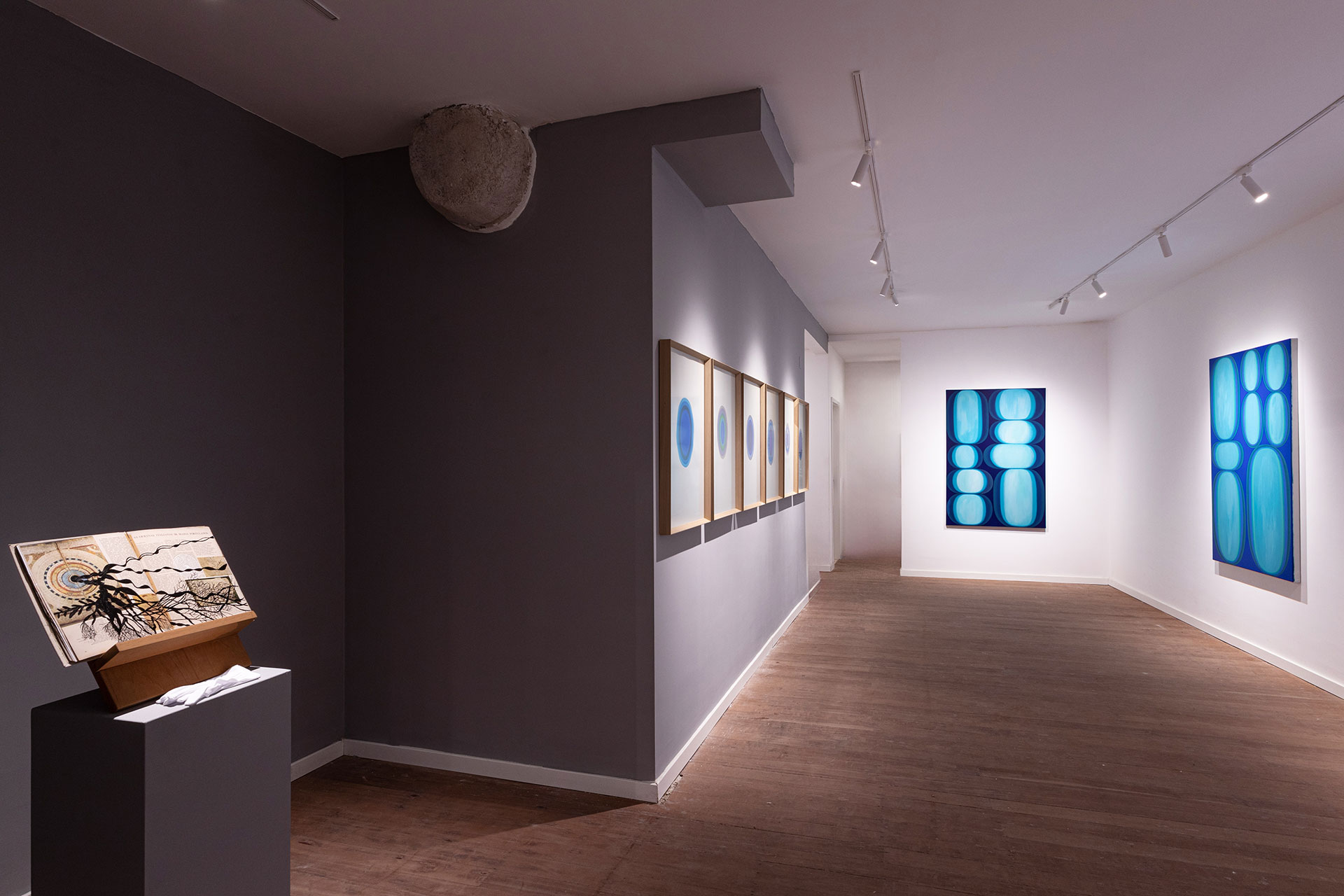
In the book-work “Tabula,” this confabulation reappears as the artist makes interventions in the form of drawings inside a collection of bound fascicle books that originally contained illustrations of old maps. “Every map is a fiction,” Queiroga’s drawings seem to whisper to us, as do the pages of this book, imbued with ink and artistic matter. The gouaches in the “A Dream for Giotto” series, in turn, relate both to the idea of a vibrational field similar to that of atomic structures and refer to the universe of the famous Italian painter by evoking the visuality of halos and the like.
All these ideas and ways of interpretation, however, could be disregarded by anyone who enters this exhibition space and seeks only, let’s say, the experience of aesthetic enjoyment from the works gathered here. The territories of thought that can help us describe the possible relationships to be established between the works present here are distinct. They are, perhaps, also of the order of the infinite. Finally, these ideas belong to the fertile ground of art, where the intersection of so many layers allows us to think about the world and everything that surrounds us, from the smallest particle to the immeasurable infinity of the universe in which we find ourselves.
Click to enlarge