
Solo Group Show
FEMA Gallery – Cascais, 2025
By Oswaldo Costa
FEMA Gallery – Cascais, 2025
By Oswaldo Costa
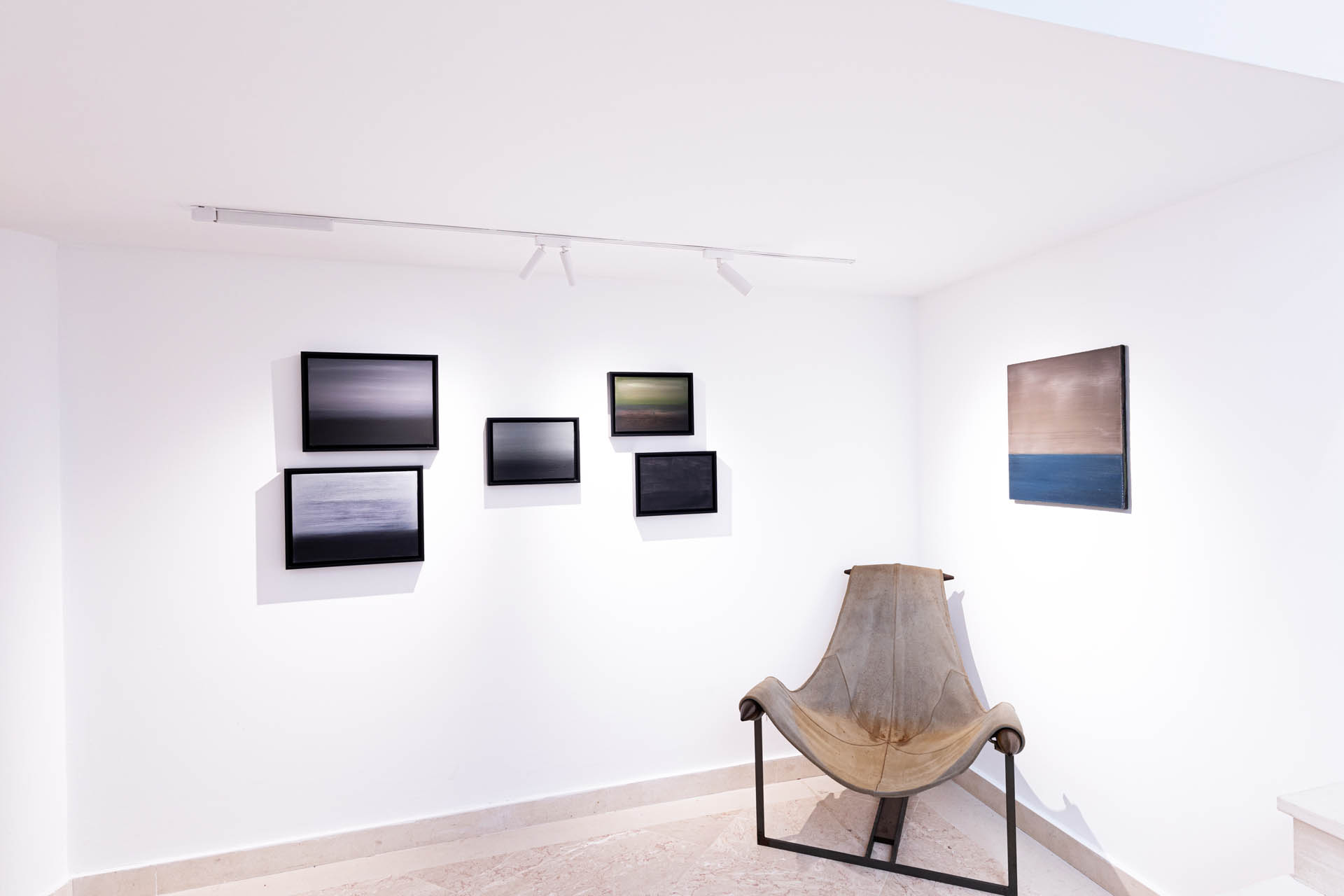
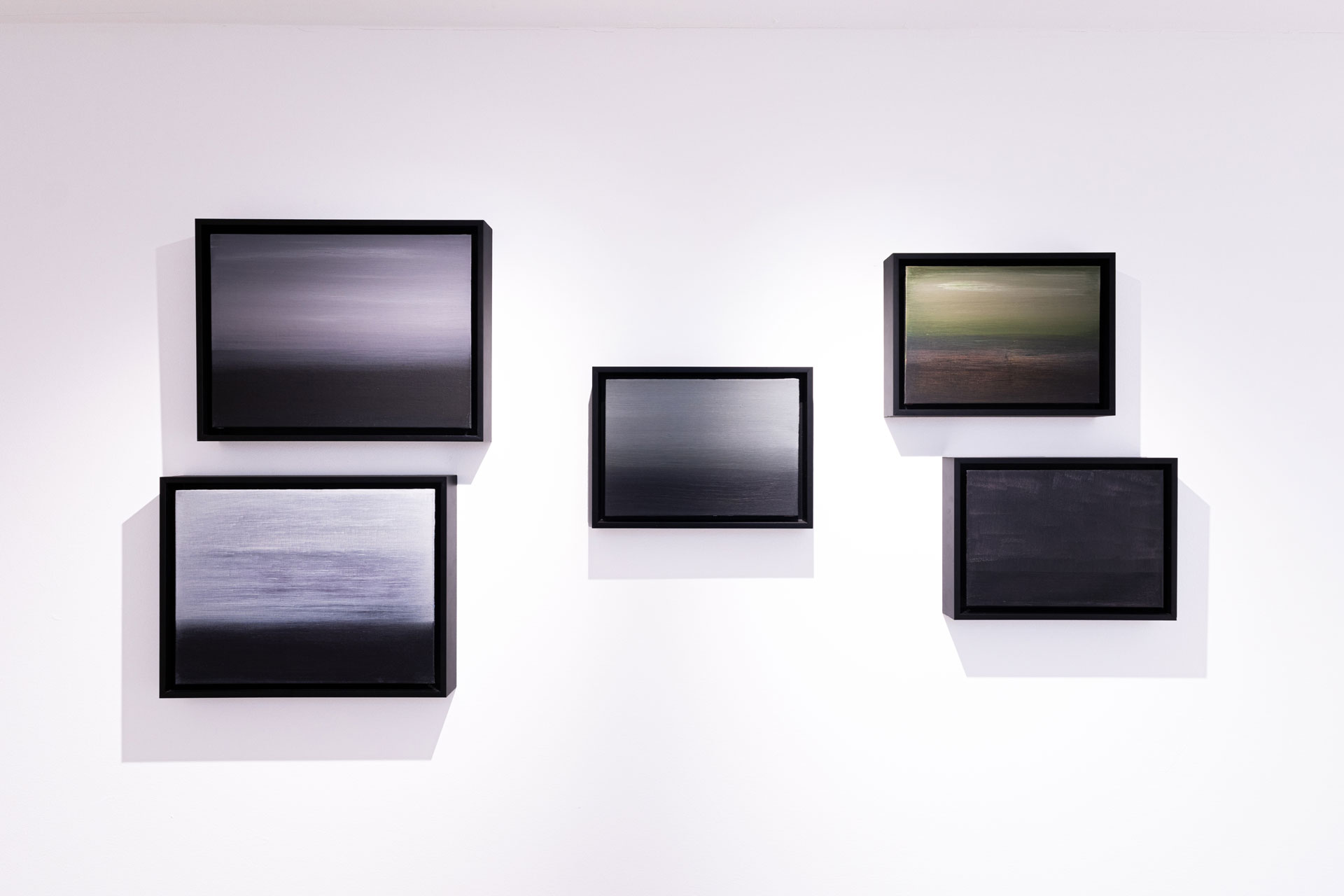
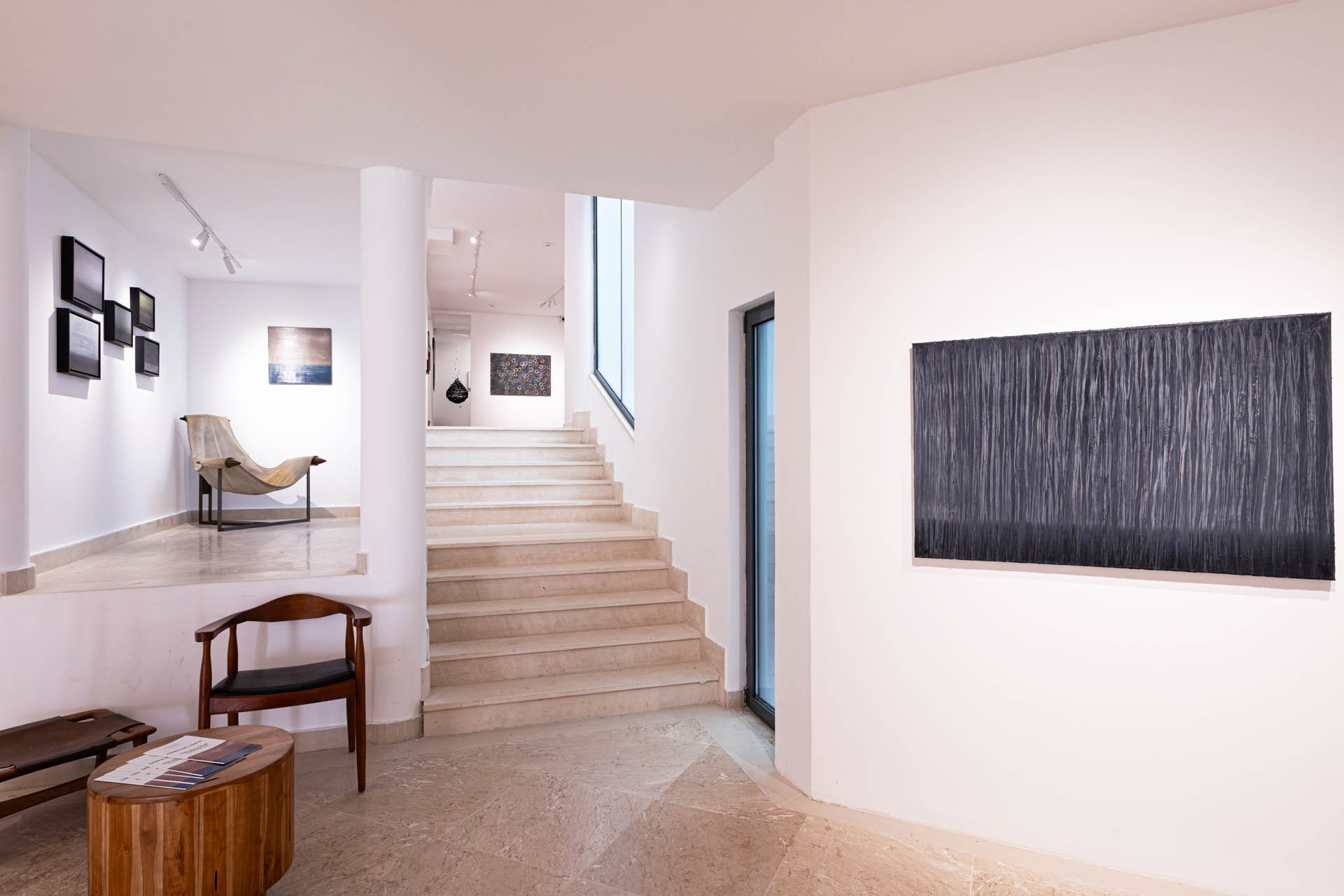
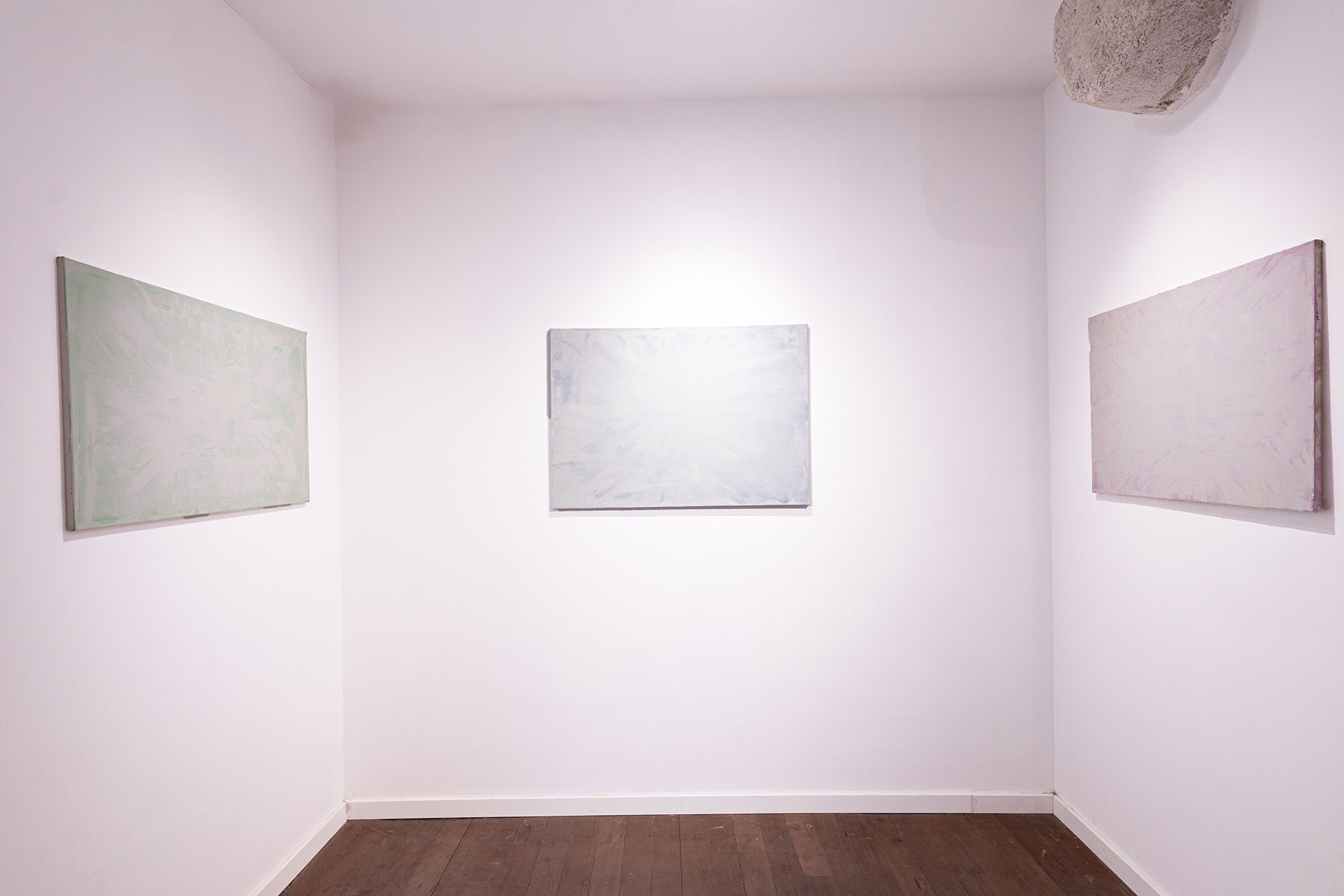
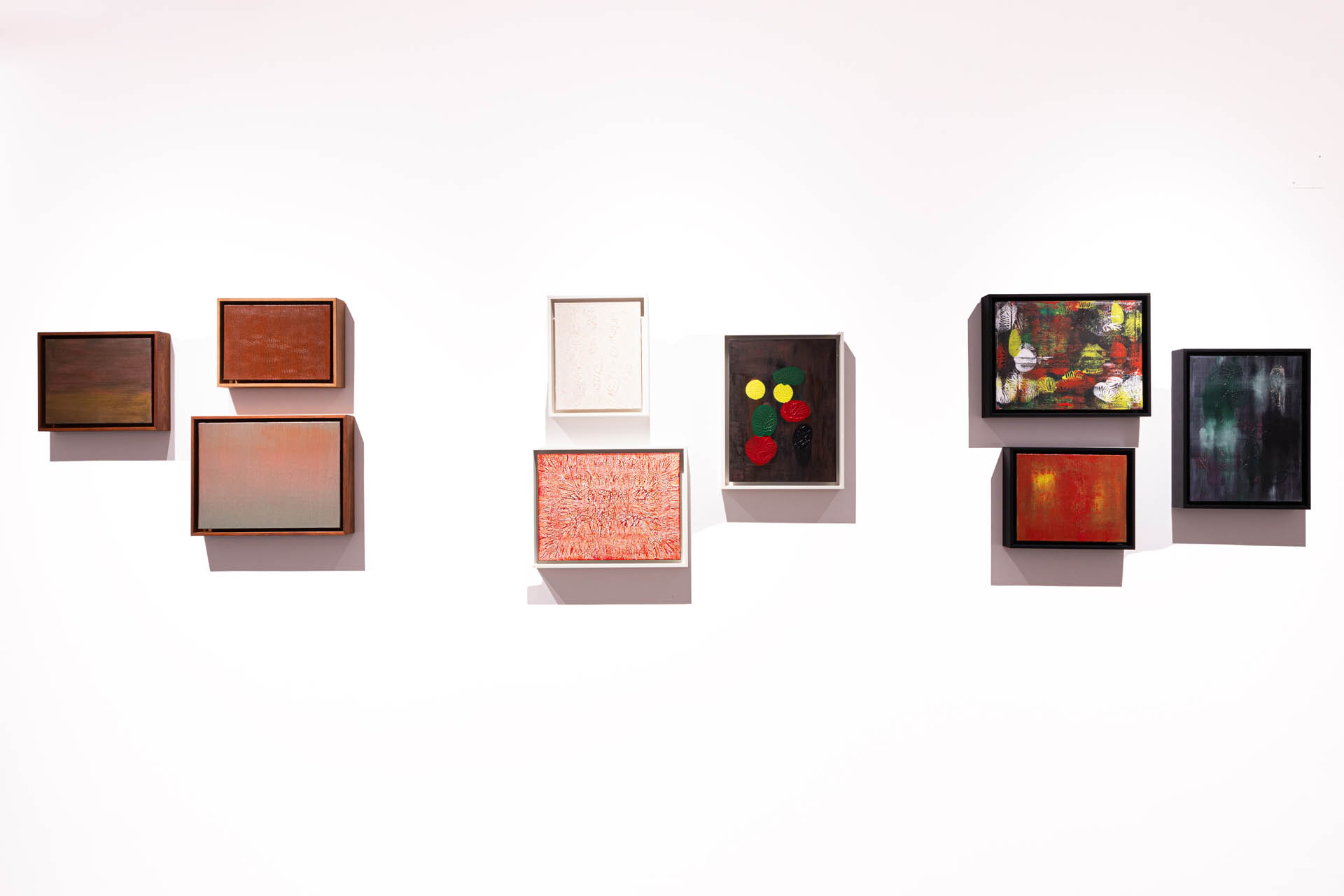
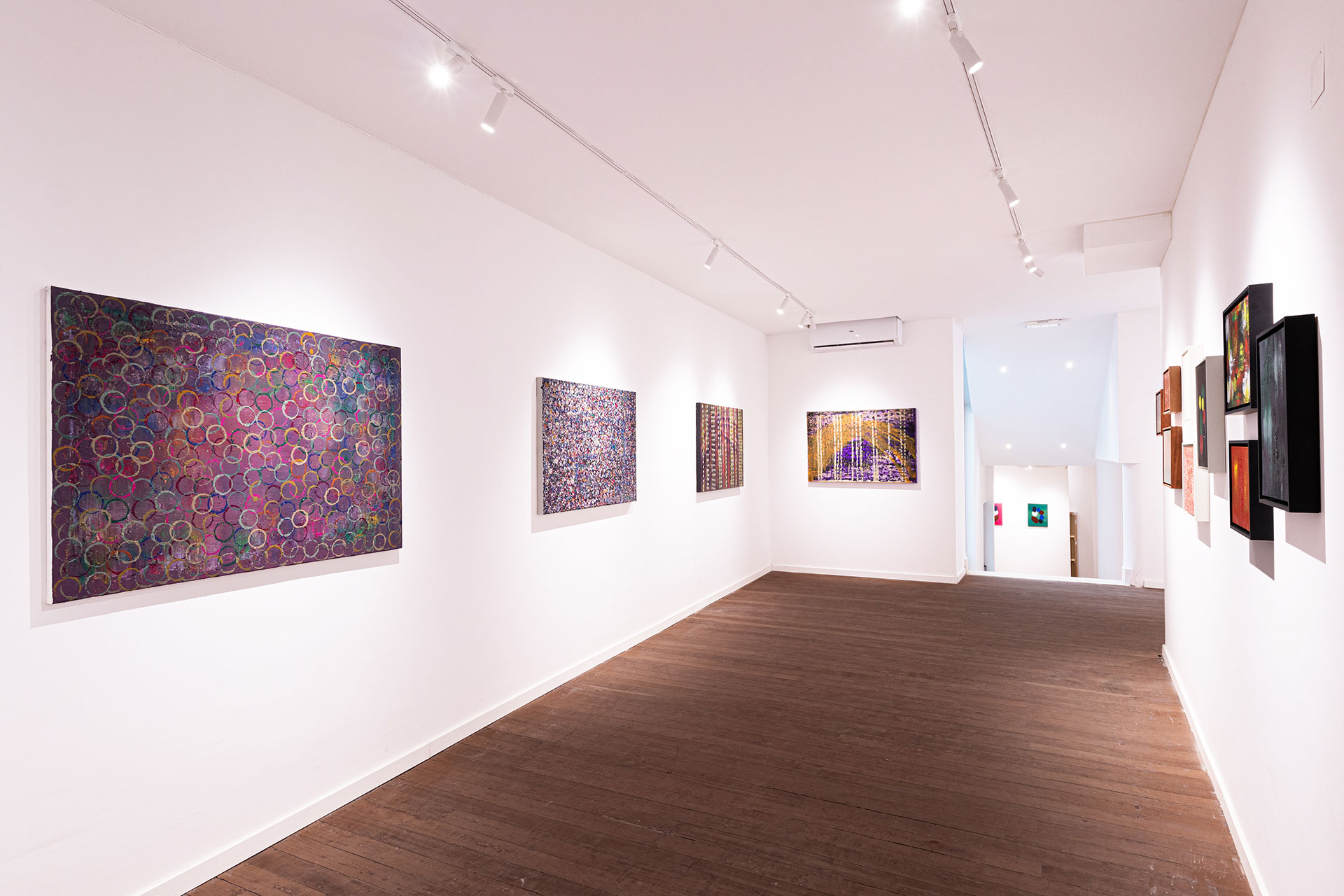
This exhibition shows what happens when a person, after observing paintings for more than five decades, decides to paint. Without brushes, using tools and paints, this person layered accidents onto surfaces until something emerged that satisfied their discernment. Since accidents have unpredictable results, different series emerged simultaneously, without any single style. Responsibility was taken for the unforeseen, but there was no pretense of crafting a personal poetics. The result is a one-person group show.
It is well known that photography and cinema vacated some of painting’s former function of portraying reality. Taking advantage of this shift, the subject of these works (like so many in contemporary art) is distilled to the most fundamental vocation of painting: the distribution of paint across a surface.
The conceptual vein, insofar as it exists, lies in the critique of the concept of authorship. A critique that has been ongoing, in various ways, for over a century. After the readymade (the first established example of appropriation) came Roland Barthes’ death of the author (emphasizing the role of the viewer), as well as a sequence of methodologies that systematize the act of making, focusing on process to reduce authorial subjectivity. Methodologies such as concretism, serialism, and chance. Other casualties of modernism’s decline were the need for a personal style and the obligation to be original.
The paintings in this exhibition contain examples of each of these approaches. But if their interest were limited to that, another kind of death would occur: that of the dying runner. Painting is of little use if the result is not greater than the sum of its parts. Here, authorial subjectivity is reduced to the personal conclusion that each work has, after much trial and error, attained a sense of completeness, one that justifies its existence in an overcrowded world. A little something that results from je ne sais quoi.
Without a doubt, this project borders on performance. One that could not exist without the complicity of a pair of heterodox gallerists. It is therefore up to the viewer, with his own brand of discernment, to establish the credibility of these objects—rescuing them from a state of sheer audacity.
Click to enlarge